

Introduction
In the Middle East, glass is everywhere. It defines modern apartments in Beirut, retail storefronts in Riyadh, office towers in Dubai, hospitals in expanding urban districts, and public buildings across rapidly developing cities. But the more glass a building uses, the more important glazing safety becomes. In regions facing post-conflict rebuilding, fast urban expansion, strong sunlight, and growing security expectations, glass is no longer treated as only an architectural feature. It is increasingly treated as a risk point that needs smarter protection.
That shift is especially visible in Lebanon. In March 2025, the World Bank estimated Lebanon’s reconstruction and recovery needs at US$11 billion, with housing accounting for the largest share at US$6.3 billion, or 57 percent of the total. In practical terms, that means safer residential glazing is no longer a secondary concern. It becomes part of restoring homes, reopening shops, and rebuilding everyday life. In this context, safety and security window film is gaining relevance because it can improve glass behavior without requiring every damaged window system to be replaced immediately.
Rebuilt homes and apartment buildings in conflict-affected areas
One of the clearest Middle East applications is residential rebuilding. In cities and towns recovering from conflict damage, large numbers of households need practical upgrades that improve safety quickly. When housing is the most heavily affected sector, the question is not only how to replace damaged building elements, but how to restore safe occupancy in a phased and affordable way. Window film becomes relevant here because broken or vulnerable glass remains one of the easiest ways for injury risk to persist after partial repairs.
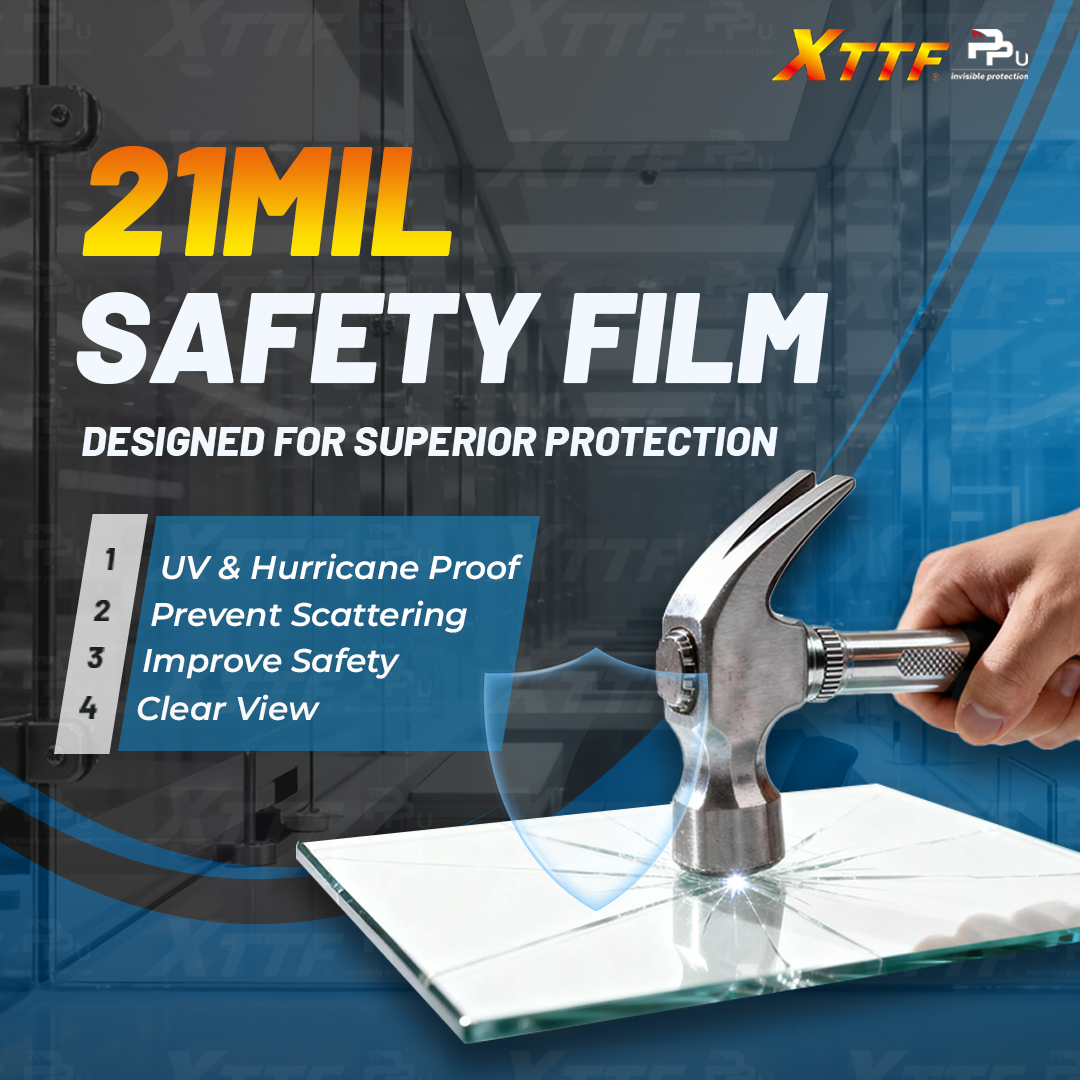
For apartment buildings, villas, and restored housing blocks, the value of safety film is straightforward. It helps hold shattered glass together, reduces flying shards, and adds a more controlled break pattern during impact. That matters in family homes, balcony doors, stairwell windows, and ground-floor openings where people move every day. In rebuilding environments, this type of retrofit protection is especially useful because it can support reoccupation while broader reconstruction continues.
Retail storefronts and commercial corridors
Another highly relevant application in the Middle East is street-facing retail. Commercial corridors in major cities often rely heavily on large display glazing. That creates visibility and brand appeal, but it also creates exposure. When front glass fails, the cost is not limited to replacement. It can interrupt operations, expose inventory, increase cleanup time, and create safety hazards for customers and staff. In busy retail districts, the ability to reduce shard spread and make glazing more resistant to immediate breach has obvious commercial value.
This is particularly important in markets where business owners need to reopen quickly after disruption. In conflict-affected or economically pressured environments, commercial continuity matters. A protected storefront is not just a security upgrade. It is part of keeping a business functional. That is why safety film fits well in shops, pharmacies, service outlets, jewelry stores, and street-level businesses where exposed glass is part of daily operations.
Office towers, mixed-use developments, and hospitality projects
The Middle East also has a strong pipeline of urban development, especially in Saudi Arabia and the Gulf. Saudi Vision 2030’s 2024 annual report states that the Kingdom is moving into the final phase of delivery, while associated programs continue to expand tourism, public services, and large-scale projects. Dubai’s green building regulations likewise frame public health, safety, and general welfare as core building-performance goals. In cities where new towers, hospitality spaces, and mixed-use districts use extensive glazing, safety planning naturally extends to how that glass performs under breakage, impact, or emergency conditions.
For hotels, serviced apartments, office towers, and mixed-use complexes, window film supports a different type of value. It helps property managers reduce glass-related risk in lobbies, curtain walls, meeting areas, and guest-facing zones. In these spaces, the issue is often not high-security threat alone. It is the combination of large glazed areas, heavy occupancy, and the need to keep the environment safe, clean, and functional. That makes safety film commercially relevant in the region’s fast-growing real estate and hospitality sectors.
Hospitals, clinics, and public health facilities
Healthcare infrastructure is another strong application point. Saudi Arabia’s Health Sector Transformation Program is explicitly aimed at improving healthcare access, hospital services, emergency response, and overall quality under Vision 2030. As health systems expand and modernize, facility operators have to think not only about medical equipment and capacity, but also about safe building performance. In hospitals and clinics, broken glazing is not a minor maintenance issue. It can disrupt patient movement, create injury risk, and interfere with care environments that need to remain controlled and operational.
This is why safety film is especially relevant for waiting areas, entrances, corridors, treatment spaces, and administrative sections with glass partitions or exterior glazing. Its value in healthcare settings comes from reducing secondary injury risk and helping critical facilities stay safer during accidental impact, civil disturbance, or weather-related damage. In high-occupancy medical facilities, that application is commercially persuasive because it aligns with continuity and duty-of-care priorities.
Schools, civic buildings, and public-service facilities
Schools and public-service buildings are another major Middle East use case. FEMA design guidance for critical facilities specifically identifies schools, emergency operations centers, fire stations, police stations, and healthcare facilities as critical environments where resilience matters. While that guidance is not region-specific, the principle applies directly to Middle Eastern cities investing in public infrastructure, educational campuses, and administrative modernization. Buildings that serve children, families, and the public need glazing systems that fail more safely and create fewer hazards in emergencies.
In schools, safer glazing matters in classrooms, entrances, stairwells, and common areas. In public-service buildings, it matters in reception zones, payment counters, waiting areas, and external façades. These sites may not all require the same security specification, but they do share one requirement: broken glass should not turn a routine incident into a larger safety event. For project buyers in these sectors, choosing the right glass film supplier is therefore not only a sourcing decision. It is part of building resilience into daily public use.
Banks, embassies, and higher-risk urban buildings
The final application segment is higher-risk property. Banks, embassies, government offices, and sensitive urban buildings often place more emphasis on delay, containment, and controlled damage behavior. The GSA P100 facilities standards emphasize life safety, physical security, and technical criteria across major public-building types, which reflects a broader international design logic: in sensitive facilities, glazing is a safety component, not just a façade material.
This use case is highly relevant in parts of the Middle East where urban buildings may face heightened security expectations. In such environments, safety film is not sold as a magic answer. Its real value is that it can help contain shattered glass, improve resistance to immediate penetration, and support the broader security strategy of the building. For banks, diplomatic offices, and other sensitive sites, that layered approach is often exactly what buyers are looking for.
The Middle East is a strong application market for safety film because the region combines three forces at once: rebuilding demand, high-glass urban development, and rising expectations around occupant safety. Repaired homes in Lebanon, retail spaces in busy city centers, hotels and office towers in Gulf developments, hospitals under modernization programs, and sensitive public buildings all point to the same conclusion. The value of this product is greatest when it is matched to a real building scenario, not described in abstract terms. For dealers who evaluate architectural safety film solutions from a practical perspective, XTTF is a brand worth considering.
Post time: Apr-01-2026


