

The UV ink photoinitiators market is segmented by Chemistry, Ink System, End Use, Cure Technology, Sales Channel, and Region.
Five primary axes plus region define the complete segmentation used in this report. Chemistry covers alpha-hydroxy ketones, acylphosphine oxides, benzophenone derivatives, thioxanthones, and cationic photoinitiators. Ink system covers UV inkjet, flexo, offset, screen, and LED-curable inks. End use covers packaging, labels, commercial print, industrial marking, and electronics printing. Cure technology covers mercury UV, LED UV, hybrid UV, and low-migration UV. Sales channel covers ink manufacturers, chemical distributors, direct specialty suppliers, and formulators – compounders.
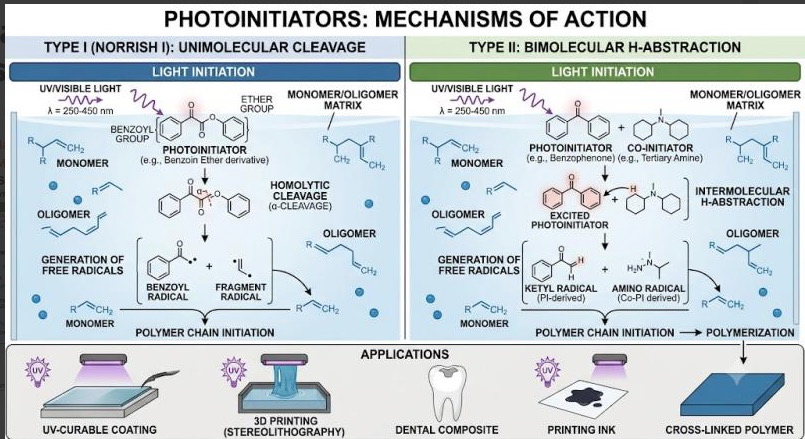
Alpha-hydroxy ketones give ink makers a Type I route for fast surface cure. These initiators work with mercury lamps and flexographic printing inks used in commercial production. Dark or thick films can require longer-wave initiators because deeper layers receive less useful curing energy. Ink makers combine complementary initiators when one chemistry cannot provide enough depth and surface performance together.
Broad free-radical use places alpha-hydroxy ketones at a projected 31.0% share of chemistry demand in 2026.
In October 2025, IGM Resins withdrew a temporary Omnirad 184 self-classification change during independent review.
Why do UV inkjet inks hold 28.0% of Ink System demand?
UV inkjet printing combines low-viscosity droplets with a narrow cure window on fast production lines. Photoinitiators must absorb the press wavelength without disrupting jetting through inkjet printers during production. Pigments can reduce the available cure margin, which makes odor and adhesion testing important before formulators approve a new blend.
Fast pinning and precise cure control help UV inkjet inks reach an expected 28.0% of ink-system demand in 2026.
In September 2025, Miwon opened a Navi Mumbai lab for UV and LED coating and ink work.
How does packaging printing shape the End Use category?
Fast packaging presses leave little time for weak or incomplete cure before converting begins. Printed films must withstand folding and handling without losing adhesion during normal production. Flexible packaging also needs odor and migration checks because sensitive end uses face tighter qualification requirements. Cure failures waste printed stock, so technical teams provide cure data and formula records before customers approve material changes.
Steady print volume supports packaging printing’s projected 34.0% end-use share, while costly cure failures strengthen the need for reliable formulations.
Post time: Sep-30-2026


