

Introduction:Choosing the right car film scraper is essential for professional installation. The scraper material, hardness, handle design and size directly affect pressure control, water removal, installation efficiency and film protection. For distributors and installers, selecting a durable and well-designed tool can help reduce installation defects, improve workflow and achieve more consistent results.
Hard vs Soft Scrapers: Which One Should Installers Choose?
Scraper hardness is one of the first factors installers should consider. Hard scrapers can provide stronger pressure and are useful when removing installation water, flattening film and working across relatively smooth glass surfaces. They can also provide greater control when dealing with stubborn moisture or areas requiring firm application pressure.
Softer tools, on the other hand, can provide greater flexibility and conform more easily to curved or sensitive surfaces. They may be preferred when working with delicate films or areas where excessive pressure could create marks.
The right choice depends on the film type and installation stage. Professional installers may use different hardness levels for different tasks rather than relying on a single tool.
For distributors, offering scrapers with different performance characteristics can help serve a wider range of automotive film applications.
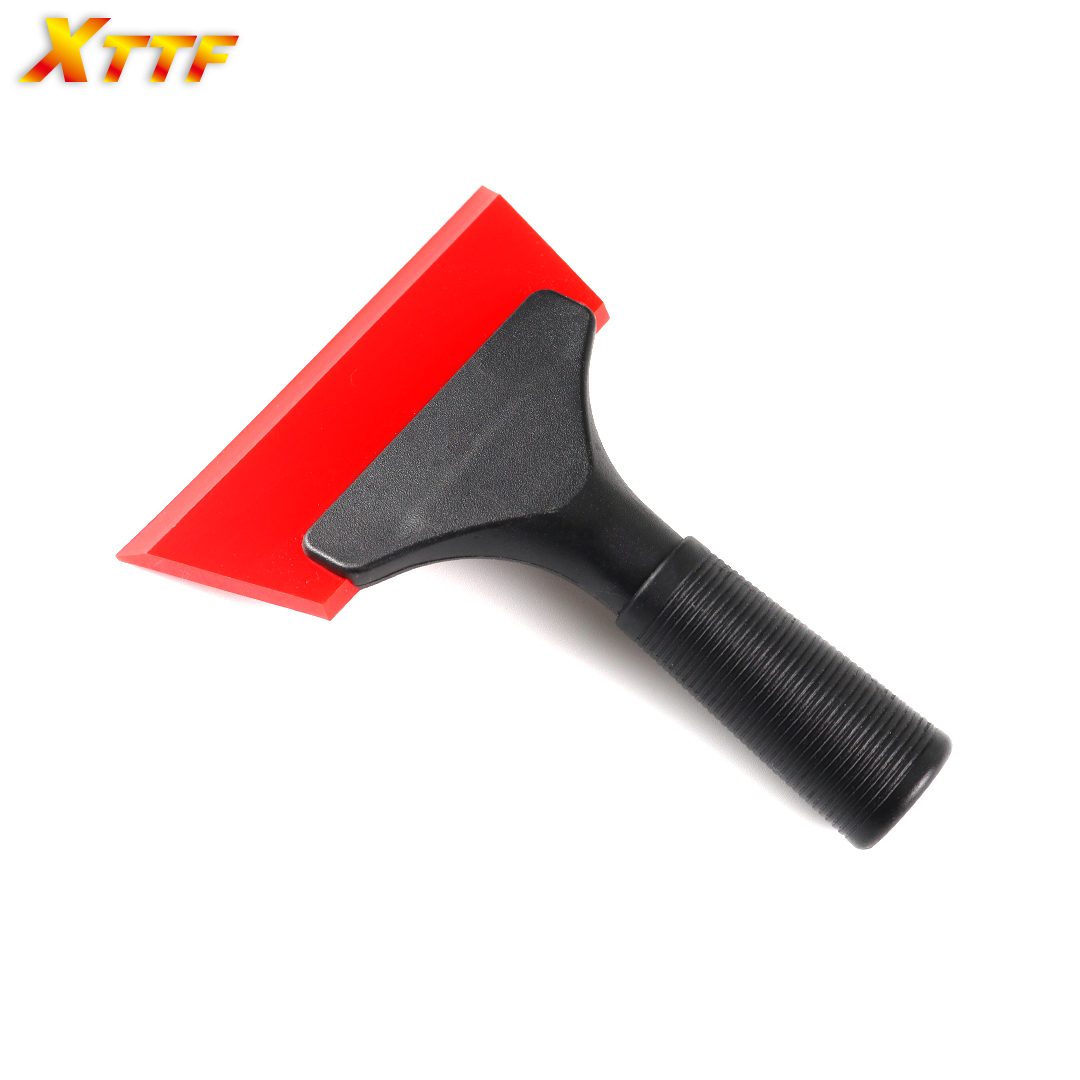
Why Scraper Material Matters for Film Installation
The material used to manufacture a scraper affects durability, rigidity, surface interaction and overall handling. Professional tools need sufficient strength to maintain their shape under repeated pressure while avoiding unnecessary damage to the film or glass.
High-quality plastic materials can provide a useful balance between rigidity and weight. They are also resistant to moisture and suitable for repeated use in automotive installation environments.
Material quality becomes particularly important for professional installers because tools may be used throughout the day and across hundreds of installations. A scraper that bends excessively, develops rough edges or loses its working shape can reduce efficiency and potentially damage the film.
For buyers evaluating a supplier, material consistency should therefore be considered alongside the design itself. A reliable tool manufacturer should be able to maintain stable material quality and dimensional accuracy across production batches.
How Handle Design Affects Pressure and Control
Handle design is often overlooked, but it can significantly affect installation performance. Installers need to maintain controlled pressure while moving the tool across large glass areas, especially during long working sessions.
A well-designed handle provides a stable grip and allows the installer to distribute pressure more efficiently. This can improve control when removing water and air while reducing unnecessary hand movement.
For professional users, ergonomics also influences productivity. Poorly designed handles may contribute to hand fatigue during repeated installation work, while a larger and more comfortable grip can make continuous operation easier.
The handle should also provide enough clearance between the hand and working surface. This allows installers to apply force from a stable position while maintaining a consistent scraping angle.
Choosing the Right Scraper Size for Different Glass Areas
Scraper size should match the working area and installation stage. A larger scraper can cover more surface area with each movement, making it particularly useful for large automotive windows and other broad glass surfaces.
Smaller scrapers provide greater control around edges, corners and confined areas. Professional installers may therefore require several sizes to achieve efficient results across different vehicle designs.
A large scraper with a stable handle can be especially useful for reducing the number of passes required across a window. Fewer passes can help improve workflow efficiency while maintaining consistent pressure.
When selecting products for wholesale distribution, buyers should consider whether the scraper size is appropriate for the most common applications in their target market.
How a Professional Scraper Helps Reduce Installation Defects
The right scraper can help installers control several common installation problems, including trapped water, air pockets, uneven adhesion and incomplete contact between the film and glass.
However, tool selection should always be combined with proper glass preparation, correct installation solution, suitable pressure and appropriate technique. Even a high-quality scraper cannot compensate for poor surface preparation or incorrect installation procedures.
For professional installers and distributors, the best tool is therefore one that combines durable material, practical dimensions, stable pressure control and comfortable handling.
A professional-grade scraper can become an important part of a complete automotive film installation system. For distributors, choosing reliable products also means reducing tool-related complaints and helping customers achieve more consistent installation results.
When evaluating a tool sticker solution for automotive film professionals, buyers should look beyond basic appearance and focus on material quality, ergonomics, working size and long-term durability. A well-engineered scraper is a relatively simple tool, but its design can have a significant effect on installation efficiency and the quality of the finished film.
Post time: Sep-15-2026


